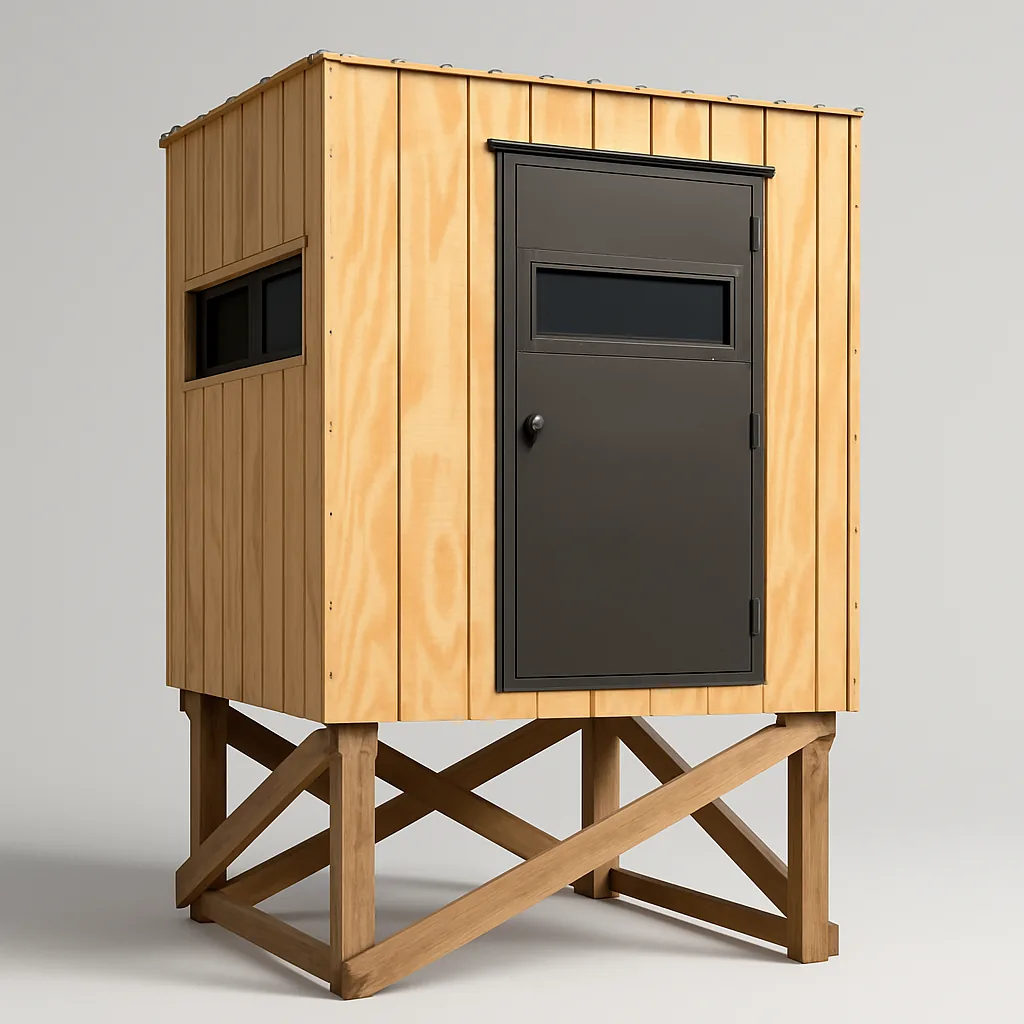
Walk into any hunting blind that's been in the field for five years and look hard at the door. There's a 50% chance it's the most-failed component in the whole structure. The plywood is delaminating, the latch is broken, the weatherstripping is shredded, the hinges are sagging, or all four at once. Doors take a beating because they're the only moving part on the blind that gets used every sit, in every weather.
Here's what to look for in a hunting blind door — and what to walk away from.
WHY THE DOOR IS THE HIGHEST-FAILURE COMPONENT
Three reasons doors fail more than any other part of a blind:
- They're the only thing that moves. Every other wall, window, and seam stays put. The door cycles open and closed every sit, plus every time you check the blind in the off-season. That's hundreds of cycles a year.
- They take direct weather. The hinge side and latch side are exposed seams that face wind and rain. Even the best perimeter weatherstrip degrades faster on a door than anywhere else on the blind.
- They get yanked. Frozen handles, cold gloves, hurry-up exits — doors get used hard. Cheap hinges and low-quality latches don't survive five seasons of that.
The fix is to start with a door built for the job, not a residential exterior door repurposed into a blind.
MATERIALS: STEEL, ALUMINUM, OR WOOD?
▸ STEEL — THE RIGHT ANSWER
Welded steel frame with a foam-cored panel is the standard for serious hunting blinds. Steel doesn't warp, doesn't rot, doesn't delaminate, and the welded corners stay square for decades. Powder-coated finish prevents rust. Heavy enough that it doesn't blow open in 30+ mph wind.
The downside is weight — a steel door is 30–50 pounds vs 15–20 for aluminum. That matters during install, not during use.
FEATURED PRODUCT
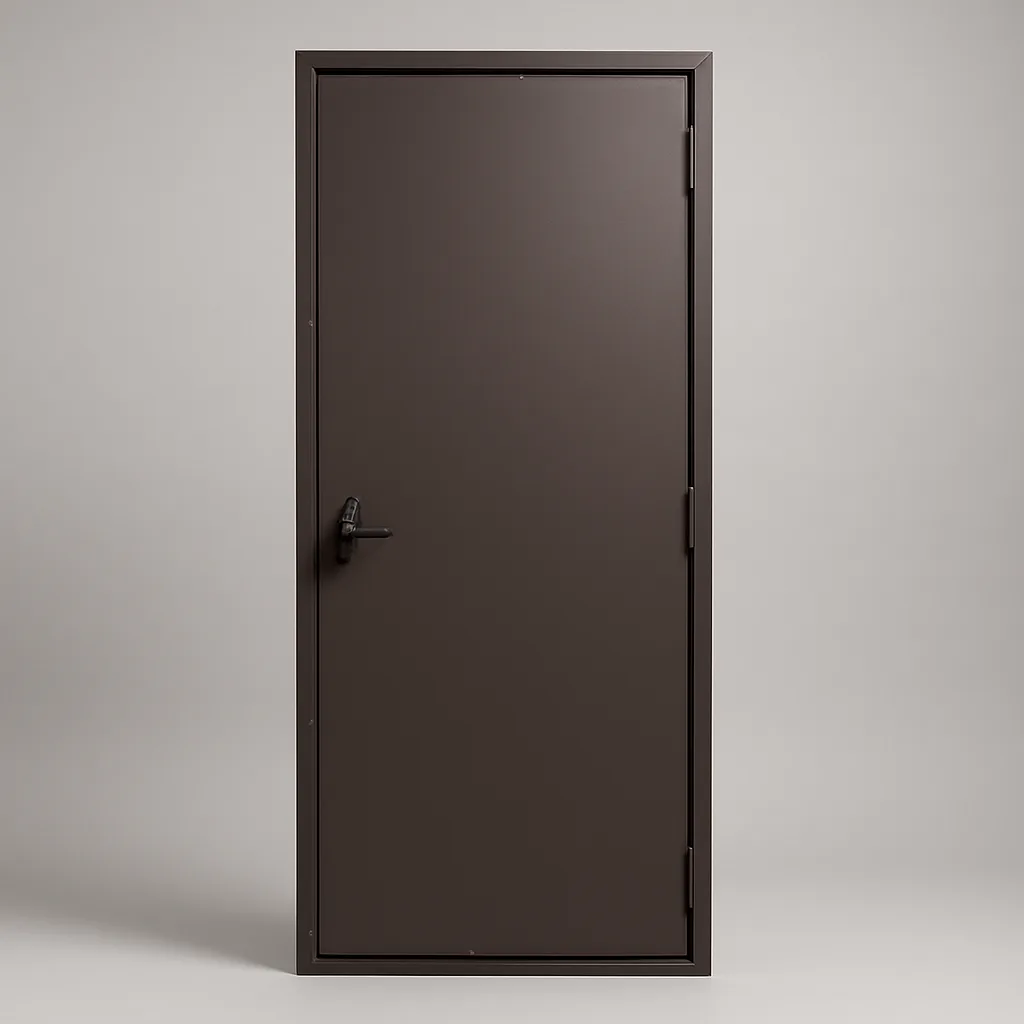
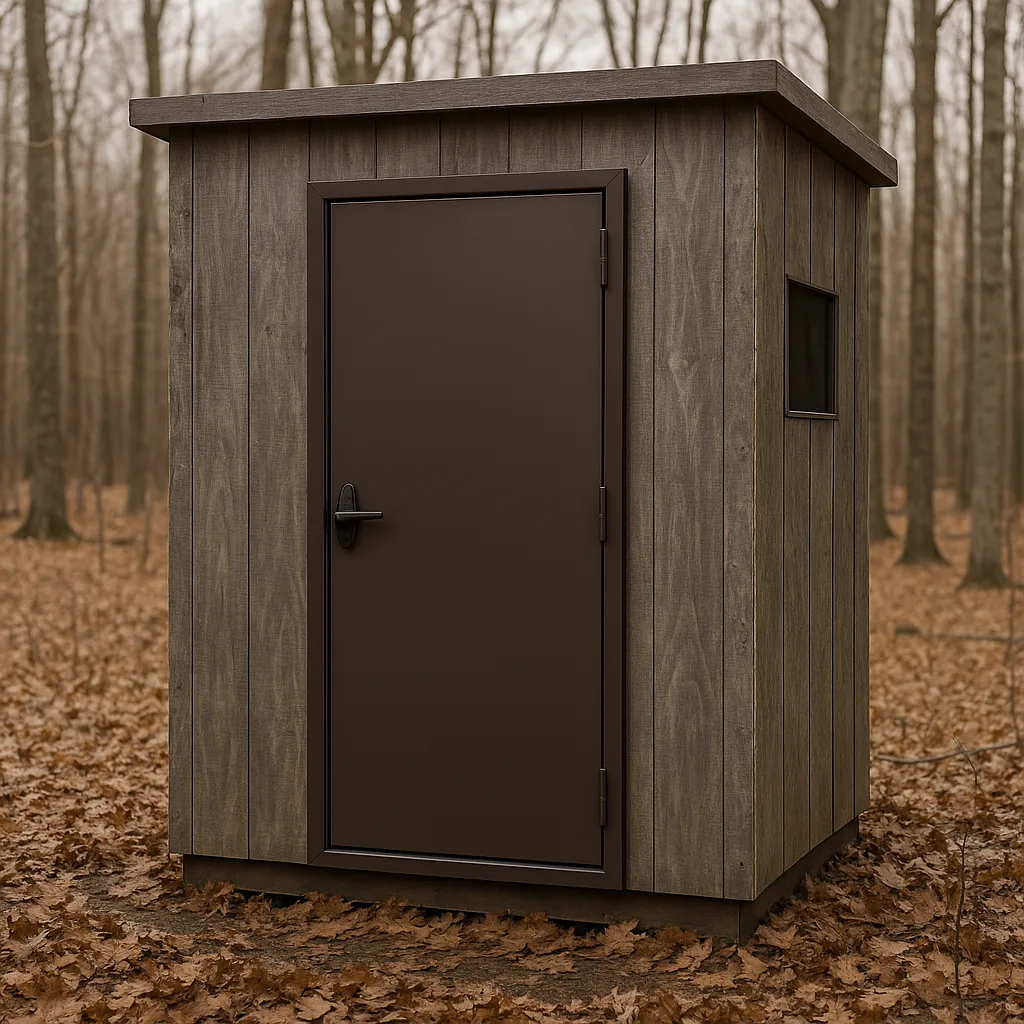
24″ × 68″ Hunting Blind Door — Steel Frame
$639.95
Steel-framed hunting blind door with full weatherstrip and silent latch.
VIEW SPECS →▸ ALUMINUM — THE LIGHTWEIGHT ALTERNATIVE
Lighter and rust-immune, but typically less rigid than steel. Aluminum doors with an extruded frame and a foam core work well on portable blinds and tower stands where weight matters. They cost about the same as steel.
▸ WOOD — SKIP IT
Solid wood doors warp, plywood doors delaminate, and even high-quality exterior-grade wood needs constant refinishing to survive the temperature swings of a hunting season. The cost difference vs steel is tiny once you factor in the maintenance. Just don't.
STANDARD 24×68 VS WIDE 33×63: WHICH SIZE?
The two standard hunting blind door sizes — and they exist for genuinely different use cases.
| NEED | 24×68 STANDARD | 33×63 WIDE-ENTRY |
|---|---|---|
| Personal blind, 1-2 hunters | ✓ Best | Overkill |
| Family hunting (kids in/out) | Acceptable | ✓ Best |
| Outfitter / guide service | Tight | ✓ Best |
| Moving large gear (heater, cooler) | Tight | ✓ Best |
| Hunting with dogs | Tight | ✓ Best |
| Cost (approximate) | $1,000 | $1,600 |
| Weight | 30-40 lb | 45-60 lb |
| Cutout size | 26×70 | 35×65 |
Most hunters should buy the 24×68. It fits the standard cutout that 90% of box blinds are designed around, costs less, and is plenty big for one or two adults to enter and exit. Buy the 33×63 only if you have a clear reason — outfitter work, hunting with kids, dogs, or moving gear regularly.
FEATURED PRODUCT
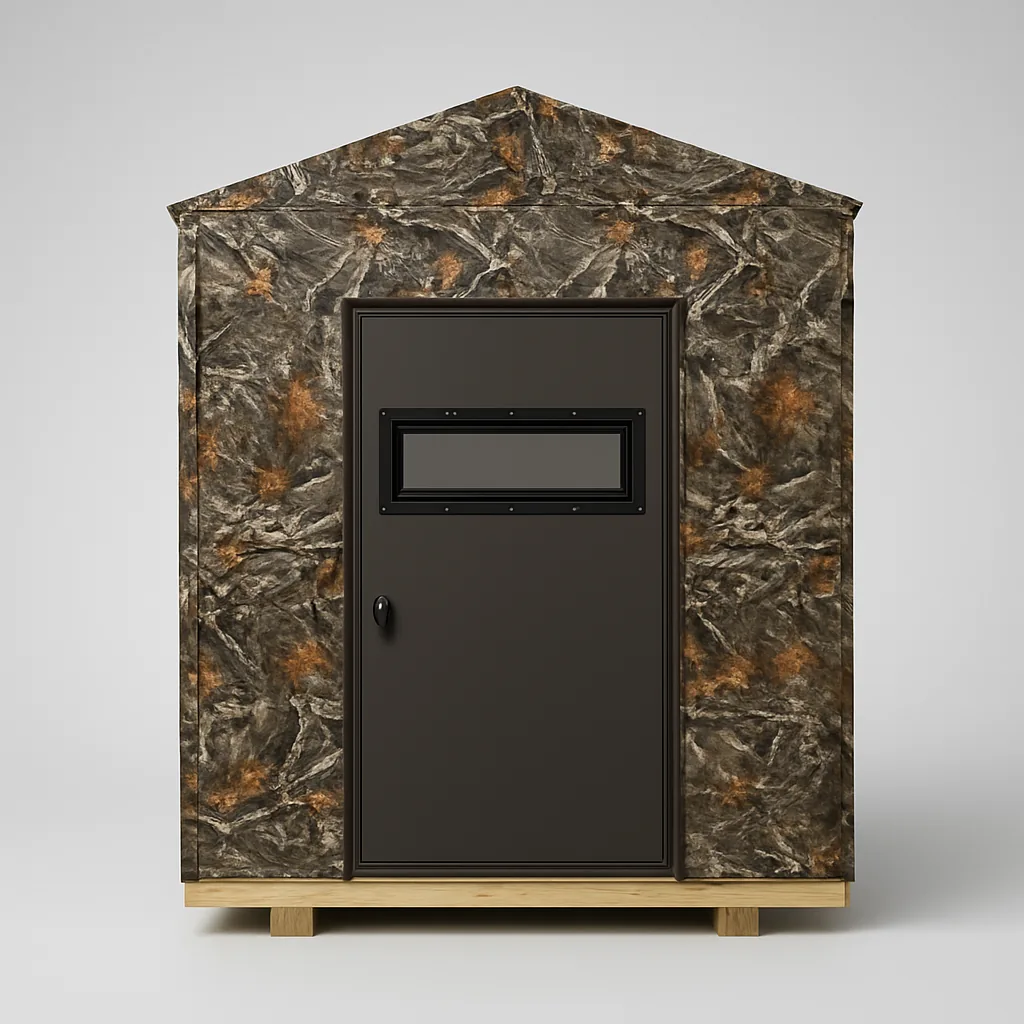
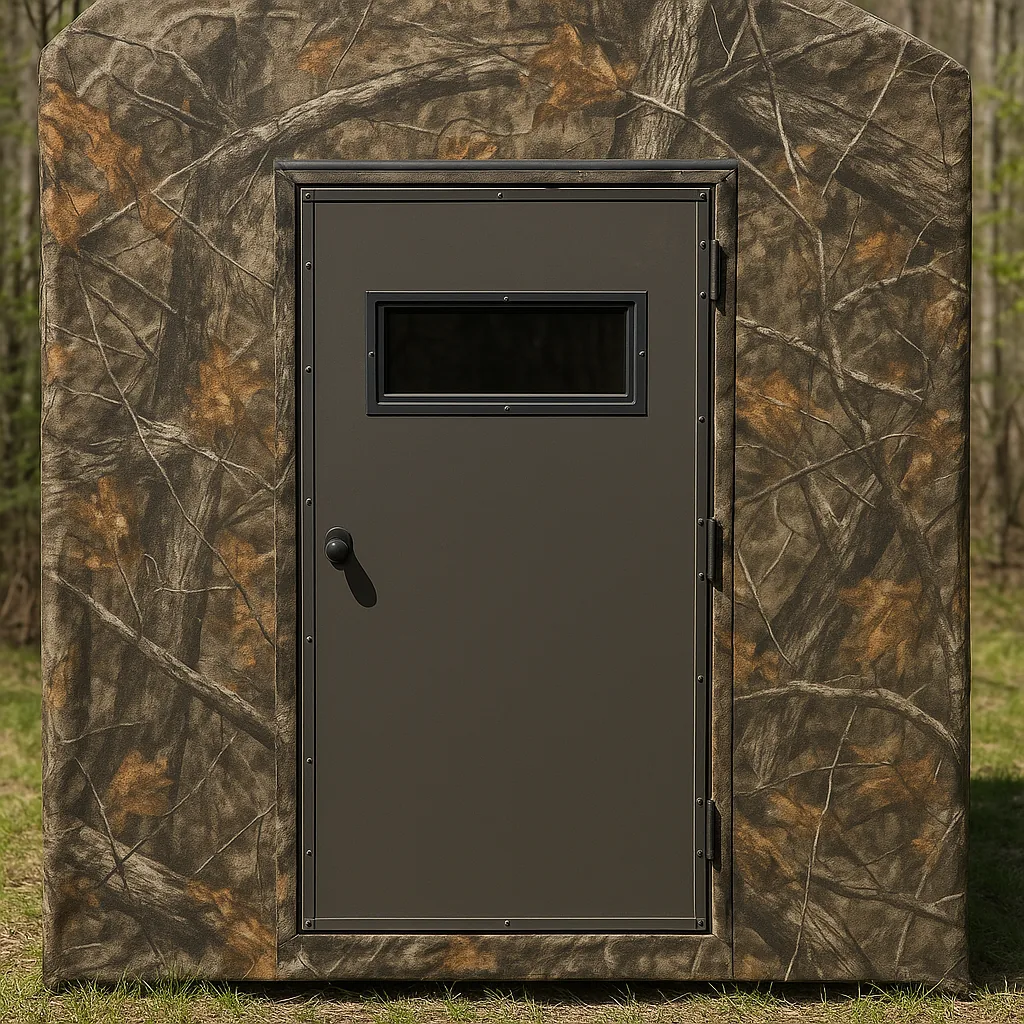
33″ × 63″ Wide-Entry Hunting Blind Door
$959.95
Wide-entry hunting blind door — gear, dogs, and clients fit through it.
VIEW SPECS →LATCH MECHANISMS: AVOID THE CLICK
The latch is the smallest and most-overlooked part of a blind door, and it's where the cheap doors give themselves away. Three latch types you'll see in the market:
- Deadbolt-style cam latch (best) — A steel cam rides on a bushed channel. Engages with a positive seat and zero spring noise. Quiet enough to operate at first light without spooking deer.
- Sliding bolt latch (acceptable) — A simple slide-into-receiver bolt. Quiet but less weatherproof — the sliding action exposes the seal cycle to dust and ice. Fine for fair-weather blinds.
- Spring-loaded ball-detent latch (avoid) — The kind you see on cheap exterior doors. Loud click on release, weak in cold weather (the spring stiffens), and the ball-detent receiver wears out within a few seasons. Never put one of these on a hunting blind.
Look for the cam-style latch and verify it's bushed (not metal-on-metal). Bushed latches stay quiet for the life of the door; metal-on-metal latches start to creak after a season or two.
WEATHERSTRIPPING MATTERS MORE THAN THE DOOR ITSELF
Half the doors in the field have great panels and bad weatherstripping. The strip is what keeps wind, rain, and cold out — without it, you have a really expensive frame around a really cold draft.
What to look for:
- EPDM rubber compression strip — black, dense rubber that compresses when the door closes against it. Holds up for 10+ years.
- Magnetic strip seal (alternative) — a flexible mag strip on the door pulls tight against a steel jamb when closed. Excellent for cold weather. More expensive.
- Foam strip (avoid) — closed-cell foam that compresses but doesn't recover. Looks fine year one, useless by year three.
- Brush sweep on the bottom — the door bottom needs a brush sweep or threshold seal. Without it, the bottom inch of the door is a draft funnel.
HINGES: HEAVY-GAUGE ONLY
Door weight + outdoor use + frequent cycling = hinges are a serious component. Light-gauge stamped hinges (the kind on a residential interior door) sag within 2–3 seasons.
Look for:
- Heavy-gauge welded steel hinges — 1/8" or thicker plate, welded to the frame, not screwed.
- Bronze or stainless pins — won't rust or seize.
- Three hinges minimum on doors over 50 lb — distributes the load and prevents long-term sag.
- Removable pins — useful for off-season maintenance.
INSTALLATION CONSIDERATIONS
Hunting blind doors are typically pre-hung — they ship in a welded steel frame that drops into your rough opening as one unit. Install is essentially a 30-minute job:
- Verify the rough opening — typically 26×70 for a 24×68 door, or 35×65 for a 33×63. Cutout dimensions are larger than the door dimensions to allow for the frame.
- Square the rough opening — diagonals within 1/4 inch.
- Drop the pre-hung unit into the opening — two people make this much easier on a 33×63.
- Shim the frame plumb — use composite shims, not wood (wood compresses under load).
- Fasten through the frame into the wall studs — typically 8–10 fasteners per door.
- Test operation and weatherseal compression — the door should swing freely and the weatherseal should compress visibly when the door is closed.
BOTTOM LINE
A good hunting blind door is welded steel (or extruded aluminum), has a deadbolt cam latch with bushed wear surfaces, runs EPDM weatherstripping with a brush sweep at the bottom, and pre-hangs in a frame that drops into a standard cutout in 30 minutes.
Pick 24×68 unless you have a specific reason to need the wide-entry, then plan to spend a little more on the door than you expect — a $1,000 door that lasts 20 years is cheaper than a $400 door that needs replacing in three.
FREQUENTLY ASKED